How to Find Out What ChatGPT Knows About Your Company
For years, digital visibility was relatively straightforward. If your company ranked well in Google, appeared in industry publications, and maintained a strong website, potential customers could find you.
That assumption is no longer enough.
Today, buyers increasingly turn to AI assistants before visiting a website or speaking with a sales team. Instead of searching through pages of results, they ask questions directly:
- "What does this company do?"
- "Which platforms are best for AI visibility?"
- "Who are the leading GEO providers?"
- "What alternatives exist to [competitor]?"
The answer they receive often becomes their first impression of a brand. That creates a new challenge for marketing teams: understanding what AI systems actually know about their business.
Many companies are surprised when they run this test for the first time. Some discover that ChatGPT provides incomplete information. Others find outdated descriptions, inaccurate positioning, or competitors being recommended in categories where they should be visible.
The reality is simple: if AI platforms cannot confidently explain who you are and what you do, they are unlikely to recommend you when potential customers are actively looking for solutions.
Does ChatGPT Read Your Website?
One of the biggest misconceptions about AI search is that ChatGPT simply reads company websites. In reality, modern AI systems develop an understanding of organizations by combining signals from many sources across the web.
Your website remains one of the most important sources, but it is only one piece of the puzzle. When ChatGPT tries to understand a company, it may encounter information from:
- Corporate websites and documentation
- Review platforms such as G2, Capterra, and Trustpilot
- Business databases like Crunchbase
- Professional networks such as LinkedIn
- Industry publications and news coverage
- Product directories and marketplaces
- Community discussions on Reddit, Quora, and Hacker News
- Structured knowledge sources such as Wikidata and organization schema markup
This means AI visibility is not controlled by a single page or a single SEO tactic. Instead, AI systems build confidence when they repeatedly encounter consistent information across multiple trusted sources.
For example, if your website describes your company as an AI visibility platform, your LinkedIn page calls it a GEO platform, and review sites categorize it as an SEO tool, AI models may struggle to understand your actual market position. The stronger and more consistent those signals become, the easier it is for AI systems to accurately represent your business.
Where ChatGPT Gets Information About Companies
Your Website
Your website is still the foundation of your digital identity. AI systems pay attention to far more than your homepage. Product pages, solution pages, documentation, blog content, case studies, FAQs, and structured data all help define how your company is understood.
Clear positioning matters. If someone asks ChatGPT what your company does, the model should be able to identify your category immediately. Ambiguous messaging often leads to vague or inaccurate responses.
Business Directories and Review Platforms
Many organizations underestimate how influential third-party profiles have become. Platforms such as Crunchbase, G2, Capterra, Clutch, Product Hunt, Gartner Peer Insights, Software Advice, and Trustpilot provide structured information that helps AI systems verify who you are.
These platforms answer important questions:
- What category does the company belong to?
- What products does it offer?
- Who are its competitors?
- How do customers describe the solution?
Incomplete or outdated profiles create gaps in AI understanding.
LinkedIn and Social Platforms
For B2B companies, LinkedIn has become one of the strongest trust signals available online. Unlike many websites, LinkedIn connects company information, founders, employees, expertise, and industry focus in a structured format that is easy to interpret.
Other important platforms include X (Twitter), YouTube, GitHub, Medium, and Substack. Together, they help establish topical authority and reinforce expertise.
Industry Publications and Media Mentions
Third-party validation remains one of the strongest indicators of authority. When your company is consistently mentioned by respected publications, AI systems gain additional confidence in your relevance and credibility.
For technology and marketing companies, examples include publications such as Search Engine Journal, Search Engine Land, HubSpot, Ahrefs, Moz, TechCrunch, MarTech, and CMSWire. A company that regularly appears in trusted industry coverage is significantly more likely to be referenced in AI-generated recommendations than one that only publishes content on its own website.
Community Discussions
AI systems also learn from how real people talk about products and brands. Discussions on Reddit, Quora, Hacker News, Stack Overflow, and niche industry communities often reveal which companies users actually mention when solving problems.
This is where many brands discover a hidden visibility gap. You may rank well in search engines, yet if conversations consistently mention competitors instead of your company, AI systems may conclude those competitors are more relevant within the category.
How to Audit Your Company in ChatGPT
The easiest way to evaluate AI visibility is to think like a potential customer.
Start with direct brand searches:
- What does [Company Name] do?
- Tell me about [Company Name].
- Who founded [Company Name]?
- What products does [Company Name] offer?
Then move to category-level prompts:
- Best AI visibility platforms
- Top GEO tools
- AI search optimization software
- Companies that improve AI search visibility
Finally, test competitive comparisons:
- [Your Company] vs [Competitor]
- Alternatives to [Competitor]
- Best platforms for AI brand visibility
These prompts often reveal far more than traditional SEO tools ever could. You quickly learn whether AI systems understand your positioning, whether competitors dominate recommendations, and whether your brand appears in commercially valuable conversations. If you want a structured starting point, our free GEO Checker runs many of these prompts automatically.
Signs You Have an AI Visibility Problem
Most companies identify at least one issue during their first audit. Common warning signs include:
- Your company is never mentioned.
- Product descriptions are inaccurate.
- Competitors dominate category recommendations.
- Company information is outdated.
- AI assistants misunderstand your target audience.
- Your unique value proposition is missing entirely.
These issues rarely happen by accident. They are usually symptoms of inconsistent brand signals, weak entity recognition, limited third-party coverage, or insufficient authority across trusted sources.
Why AI Visibility Requires New Measurement Tools
Traditional SEO tools can tell you where you rank. Google Search Console shows impressions. Google Analytics shows traffic. Rank trackers monitor keywords.
None of them can answer a much more important question: would ChatGPT recommend your company when a buyer asks for a solution in your category?
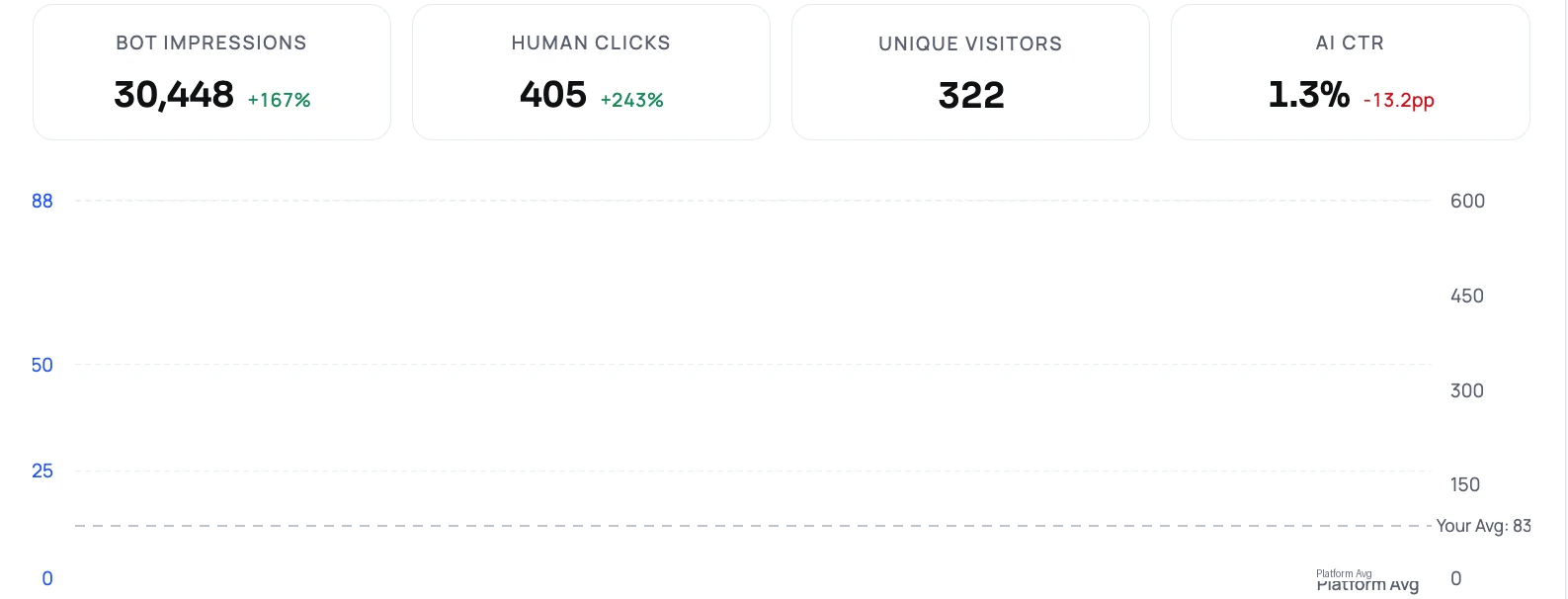
That is the core challenge of Generative Engine Optimization (GEO). As AI search becomes a primary discovery channel, businesses need visibility metrics designed specifically for AI-generated answers rather than traditional search rankings. Our AI Bot Analytics Platform shows which engines are actually reading your site, while the 2026 GEO platforms guide compares the tools built for this new layer.
How LightSite Helps Improve AI Visibility
LightSite was built to help companies understand how AI systems perceive their brand and identify opportunities to improve visibility across platforms such as ChatGPT, Claude, Gemini, and Perplexity. Instead of focusing solely on rankings, LightSite analyzes the factors that influence AI recommendations.
This includes:
- AI visibility audits
- Brand mention monitoring
- Competitive visibility analysis
- Citation opportunity discovery
- Entity optimization
- AI readiness assessments
The goal is simple: help organizations become easier for AI systems to understand, trust, and recommend. If you also want to see how this work translates to other assistants, read our companion piece on how to find out what Claude knows about your company.
Final Thoughts
The future of search is no longer limited to search engines. As more buying journeys begin inside ChatGPT, Claude, Gemini, and Perplexity, companies need to understand how these systems perceive their brand.
If an AI assistant cannot accurately explain your business today, it is unlikely to recommend you tomorrow. The first step is discovering what ChatGPT already knows about your company. The second is making sure the answer reflects the brand you want the world — and AI — to see.