How Hotels Can Optimize and Track AI Booking Agents
Short answer: AI assistants such as Google AI Mode, ChatGPT and Gemini now research hotels, compare options and check policies for travelers, and Google is building direct hotel booking into its AI surfaces. To win these bookings, a hotel needs clear facts an agent can read and reach, plus tracking that follows the journey from the agent's first visit to the confirmed reservation.
What is the AI hotel booking journey?
The classic hotel funnel was simple: search, website visit, booking engine, reservation.
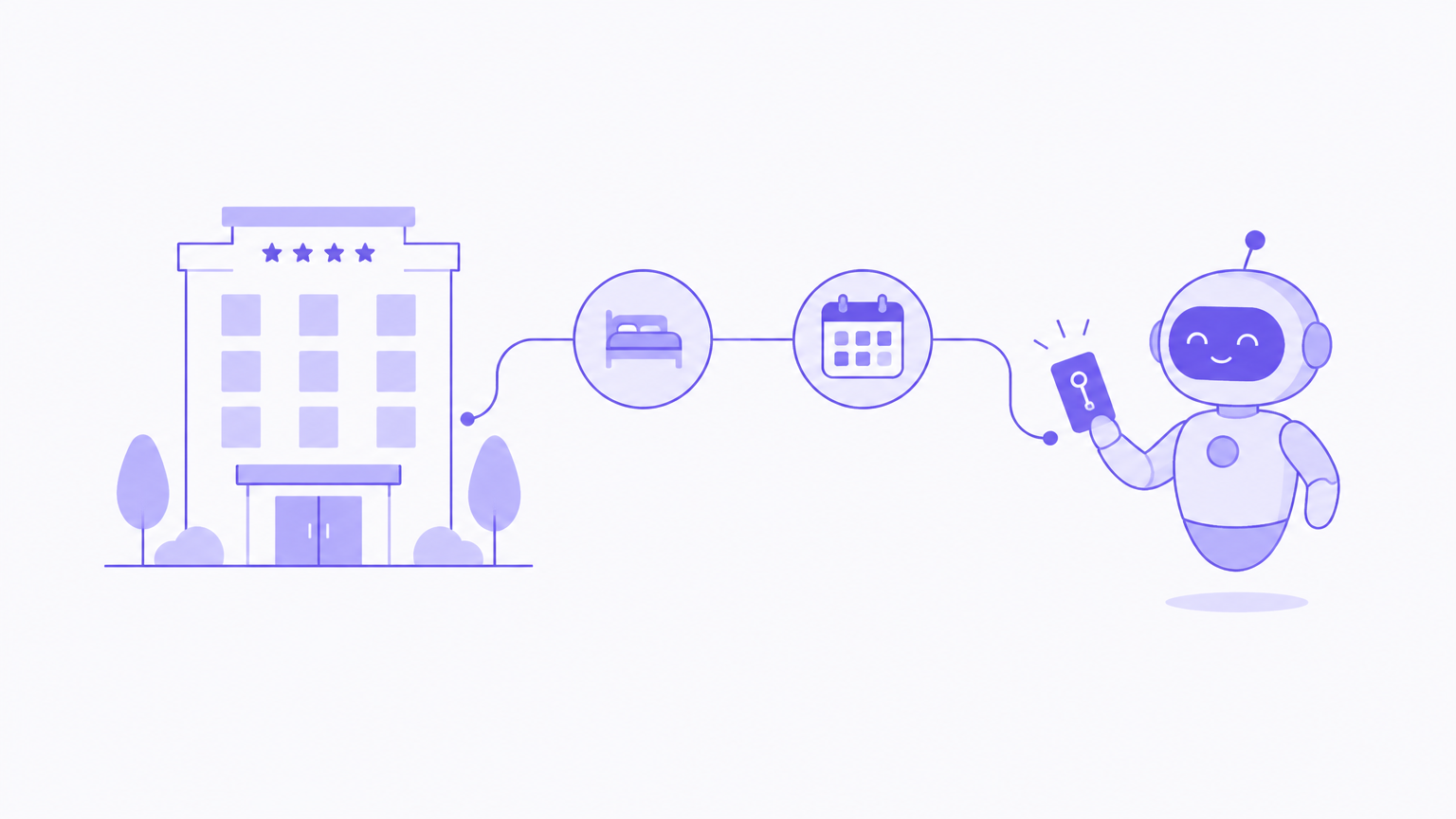
The AI journey adds steps that happen before any guest lands on your site:
Traveler asks an assistant
  → assistant reads hotel pages and compares options
  → assistant checks rates, policies and availability
  → traveler (or the agent) takes an action
  → booking
Part of the decision is now made by software reading your website. If you only measure human sessions, you miss the part of the funnel where the shortlist gets built.
What is Google's Universal Commerce Protocol for Lodging?
It is an open standard Google is extending to travel so that AI interactions can turn into instant room reservations on Google surfaces such as AI Mode in Search. Google says the hotel remains the merchant of record and keeps its customer data and relationships. The protocol works alongside MCP, A2A and AP2. As of October 2026 Google runs a partner waitlist, with detailed onboarding specs still to come (Google for Developers).
Our read: this is a clear signal of direction, not something every hotel can switch on today. The groundwork below is useful either way.
What information do AI agents need from a hotel website?
Agents look for plain facts, not slogans. Make these easy to find on clear, crawlable pages:
- Room types, sizes and bed configurations
- Rates and where live availability is shown
- Amenities
- Cancellation, check-in and check-out policies
- Location, parking and transport
- Pet, family and accessibility details
- Where booking starts and how to contact the property
Three things commonly block agents: details that only appear after JavaScript runs, bot protection that rejects AI crawlers, and booking flows split across several third-party domains. You can check whether agents can read your pages before worrying about anything else.
The aim is not an "AI-readable" site for its own sake. It is making the next step obvious: where availability lives, where booking begins, and which actions exist.
How do you track AI-referred hotel bookings?
Track five stages, because each one proves something different:
- Agent reads. An AI crawler fetches a room page. This shows discovery, not intent.
- Agent acts. A user-requested fetch hits a policy or booking page. This is stronger intent, made on a traveler's behalf.
- Guest arrives. A visitor lands from ChatGPT, Gemini, Perplexity or Google AI Mode.
- Booking action. The visitor clicks to book, submits a form, or taps phone or email.
- Confirmed booking. A confirmation page or booking value is recorded.
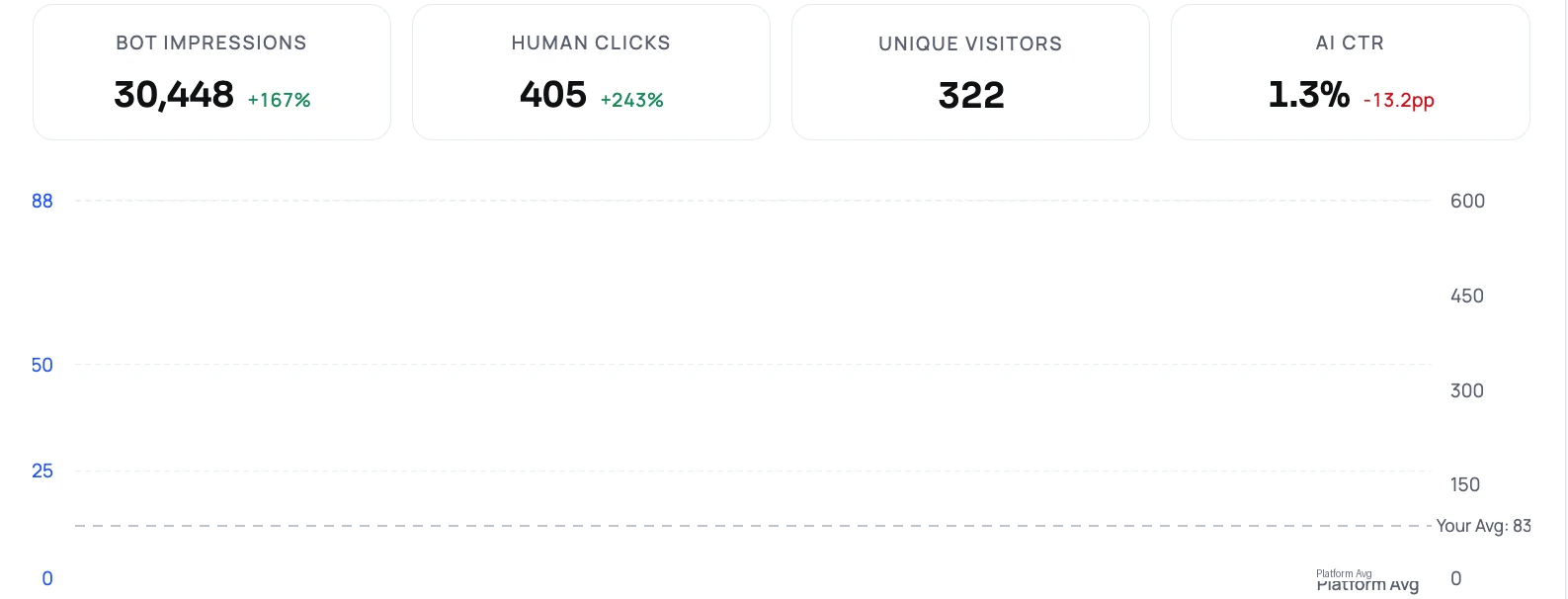
The gap between stage 1 and stage 3 is what we call AI CTR: how much agent reading turns into real guests.
What should hotel marketers measure?
- Which pages AI agents use most
- Which assistants send guests who book
- Whether agents reach the booking path or stop before it
- Which traveler questions lead to commercial activity
- How many reservations, and how much revenue, came through AI-assisted journeys
The last number is the one that matters. A visibility score that never connects to reservations is hard to defend in a budget meeting.
How LightSite tracks the agent-to-booking funnel
LightSite separates AI crawler activity and user-requested agent fetches from human traffic, so you can track AI agent visits page by page. It then identifies visitors arriving from AI assistants and connects those sessions to actions on your site: booking clicks, form submissions, phone and email clicks, and confirmation pages.
The AI agent actions view shows what agents did on your site: which pages they opened, in what order, and which actions followed. There are four action types: form sent, contact click, call-to-action click (book, reserve, buy) and action page opened (booking, contact or pricing). You see this per assistant, with an action rate for each, so you can tell whether ChatGPT or Perplexity agents actually reach your booking path. A typical journey reads like: Rooms, then Policies, then Booking click.
No guest names, form contents or payment details are read. The system only records that an action happened. Hotels that want deeper attribution can connect a confirmed booking to its value.
If you also sell rooms or packages through product-style listings, our guide on preparing for OpenAI Shopping covers the catalog side.
FAQ
Can ChatGPT or Google book a hotel directly?
Google is building direct hotel booking into AI Mode through its Universal Commerce Protocol for Lodging, currently via a partner waitlist. Most assistants today research and compare, then send the traveler to book.
What is hotel GEO?
Hotel GEO (Generative Engine Optimization) is making a hotel's facts easy for AI assistants to find, understand and act on, and measuring what happens next.
How do I know if AI agents are visiting my hotel website?
Standard analytics tools usually hide bot traffic. You need server-side or edge-level bot analytics that identify crawlers like GPTBot, ClaudeBot and PerplexityBot.
Does bot protection stop AI agents from reading my hotel site?
It can. Strict bot rules often block AI crawlers by default, so check your firewall settings and robots.txt for the agents you want to allow.
How can hotels track bookings that start in AI assistants?
Identify visits referred by AI assistants, then connect those sessions to booking clicks, forms and confirmation pages.
Can I see what AI agents did before a booking?
Yes. LightSite's AI agent actions view shows the pages each assistant opened, the order it opened them in, and which actions followed.
Does tracking AI referrals collect guest personal data?
It does not need to. LightSite records that an action happened, not guest names, form contents or payment information.