ChatGPT Search Console Is Coming. The Mention Tracker Business Has a Problem.
Finally. I have been expecting this for a while.
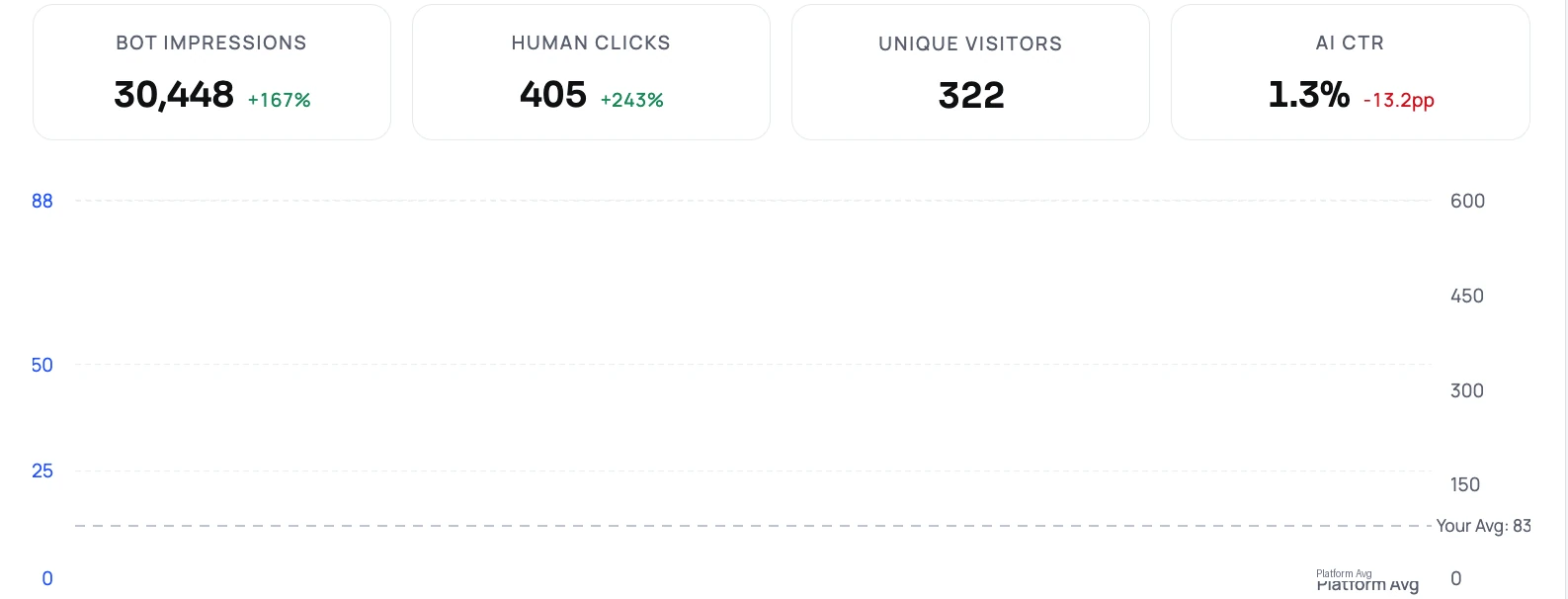
On November 6, Search Engine Land reported that OpenAI is developing a Business Hub where verified businesses could see how often they appear in ChatGPT answers and how many people click through to their websites. The screenshots suggest daily impressions and clicks. OpenAI has not officially launched this tool or announced a release date. But the direction is pretty clear.
And I think it changes the economics of AI mention tracking.
I've said this before
In January, when we made LightSite's AI Search Mentions Tracker free, I wrote that counting mentions was useful, but it should not be an expensive product on its own.
I still believe that.
For the last couple of years, many GEO tools have worked roughly the same way. They run a list of prompts through ChatGPT or other assistants. They count how often your brand appears. Then they show you a chart, maybe with a ranking or share-of-voice score.
I use those checks too. They can reveal a wrong description, a missing recommendation, or a competitor showing up instead of you. But they are samples of answers, not a count of what real people saw.
OpenAI is in a position to give businesses actual ChatGPT impression and click numbers. If it does, charging hundreds or thousands just to estimate those numbers becomes much harder to justify.
That doesn't mean every AI visibility tool is dead. The reported Business Hub doesn't show prompts or competitor rankings. Testing buyer questions will still help diagnose why things change. I just don't think another mentions chart is where the value is.
What I want to know instead
When I look at a customer's website, I want to know what the machines actually did.
Which AI crawler reached the site? Which page did it request? Did it get the product information, pricing, or policy it was looking for? Did a user-triggered agent use a search tool or another action the site makes available?
And did someone later arrive from ChatGPT or another assistant and do something useful — look at pricing, start a form, book a call?
These are different events. A crawler request is not a ChatGPT search impression. A tool call is not a sale. A form click is not a completed purchase. I want to measure each honestly, because otherwise the chart looks impressive but tells me very little.
I also want to see this page by page, not just as an account total. If agents keep requesting a product page that returns a broken response, that's something I can fix. If they can read a page but cannot use the information, that's a different problem. If AI sends visitors and the conversion path fails, that's another one. That is what AI bot analytics and agent journey tracking are for.
The website has to be usable by agents
This is the part I think gets overlooked.
Reporting can tell you what happened. It does not make your website easier for an AI agent to use.
At LightSite, we put a machine-readable layer on the website so AI systems can reach clear business and product facts without fighting through a heavy frontend. We deploy discovery resources and, where supported, callable tools such as WebMCP so an agent can search or ask the site directly.
Then we measure identifiable crawler activity, page requests, tool calls, and AI-referred visitor actions. When a system sends an actual question to a website tool, we can see that interaction. We cannot see every private question somebody asks ChatGPT, and I would never claim we can.
Finally, we help do the work: fix technical access, improve the pages that are missing useful answers, create better content, find relevant citations, and prepare outreach. The team reviews what goes out.
That is what I've been building. Infrastructure first. Real behavior data second. Execution third.
Mention tracking remains one input. It was never the whole point of LightSite.
My advice when ChatGPT Search Console arrives
Use it. I will.
If OpenAI gives businesses reliable first-party impressions and clicks, those should be the starting numbers for ChatGPT visibility. I would not pay another company to pretend its sample is more accurate than OpenAI's own counts.
But I would still ask the questions the console cannot answer: Can an agent actually use my website? What does it request? Where does the journey break? What should I change, and who will make that change? The free Agent Readiness Checker is a good place to start.
Those are the questions I built LightSite to answer.
Source: Search Engine Land, November 6, 2026. Previously: Why We Made a Free AI Search Mentions Tracker.
Explore: AI-Ready Website · Agent Readiness Checker · AI Bot Analytics · AI Agent Journey Tracking · WebMCP · Execution Agent.