What Meta Muse, Instinct and Dots Do on Websites
What is Instinct or Muse doing on my website? That is becoming a practical marketing question. Browser agents can research products, navigate pages and attempt purchases for people. DataDome reported 26.1 million requests attributed to Meta Muse, Instinct and OpenAI Dots across its network in October 2026. To understand their commercial impact, brands need on-site journeys and outcomes, not just a count of mentions in AI answers.
What is agent traffic?
Agent traffic is website activity generated by software carrying out a task for someone. A crawler retrieves content. A browser agent can also run JavaScript, search, click, enter information and move through a buying journey. People who follow links from ChatGPT or Perplexity are a third category: human AI-referred visitors.
These categories can overlap at the request level. A page load alone does not reveal who controlled the browser. The useful question is what happened next: which pages were accessed, which tools were called, and where the journey stopped. LightSite’s agent journey tracking connects this measurement question to website improvement.
What Meta Muse, Instinct and Dots can do
Meta introduced Muse in September 2026 as a personal AI agent with its own browser environment. Instinct offers an assistant people can message. DataDome describes OpenAI Dots as using a Chrome-based browser in a cloud environment.
In DataDome’s demo-shop test, all three found a keyboard, signed in and completed an order, with the customer approving key steps. That demonstrates a possible shopping flow, not a guarantee that every agent can complete every brand’s checkout. ChatGPT Agent and other assistants also make browsing and task completion relevant to marketing teams.
What DataDome actually measured
DataDome’s research and its published telemetry summary report requests across its network from October 17–23, 2026:
| Agent attribution | Requests | Share reaching sensitive endpoints |
|---|---|---|
| Meta Muse | 22.1 million | 10.7% |
| Instinct, tracked from October 19 | 2.6 million | 9.2% |
| OpenAI Dots | 1.4 million | 12.3% |
Sensitive endpoints include forms, login, cart and payment. These units are requests, not unique agents, shoppers, sessions or completed sales. The sample is DataDome’s network, not the whole web or LightSite’s customers. The important commercial signal is that attributed traffic reaches buying paths, rather than only informational pages.
How to see browsing, questions and friction
Start with three separate views. Server or edge logs show requests and access failures, including traffic that never runs your page script. Browser events show observed navigation, CTA and contact clicks, and form-submit attempts when collection is permitted and the script runs. Booking or commerce records confirm accepted transactions.
Join these with first-party session identifiers where available. A form attempt is not a lead accepted by your server; a checkout click is not a purchase. An off-site checkout needs a separate confirmation connection. Agent names declared in user-agent strings are labels, not identity proof. Unclassified automation can include QA scripts.
What WebMCP adds
WebMCP is an experimental browser-side capability through which a page offers tools to a compatible agent. LightSite’s four read-only tools provide business facts, site search, product search and contact information. Supported collection records the tool, cleaned question or search, page and outcome; collection can be disabled.
This is a conversation with your website tool, such as “Does this plan include HubSpot?” It is not the person’s private original prompt. WebMCP setup and WebMCP vs MCP explain the implementation choices.
AI mention tracking vs agent traffic intelligence
Mention tracking asks whether a brand appeared in sampled answers. Agent traffic intelligence asks what was observed on the website: pages, tool questions, clicks, attempts and failures. Paths reaching pricing, contact or booking are useful ROI proxies; confirmed revenue requires transaction evidence. Neither measurement replaces the other.
Where LightSite is going
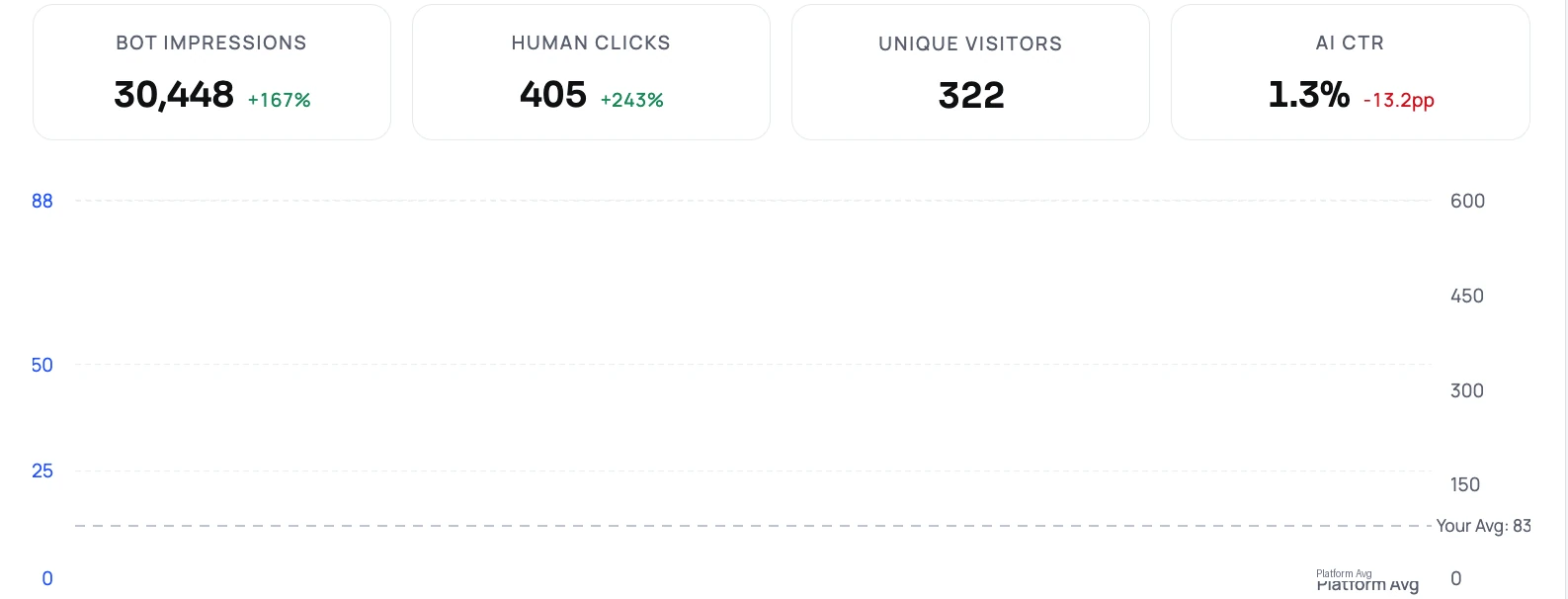
LightSite combines an AI-ready website, measurement and approved SEO and AEO execution. Its existing building blocks include bot requests, AI-referred visits, browser interactions and read-only tool observations. We are building toward clearer visibility into emerging browser agents, including Muse, Instinct and Dots, without presenting current labels as verified named-agent detection.
Asking “what did Instinct do on my website?” should become as routine as checking a traffic report. Start with the Agent Readiness Checker, explore the hotel booking journey, or compare GEO tool approaches. LightSite helps turn what you observe into reviewed fixes. Get started.