From Web Mentions to LLM Citations: What Legacy Tracking Misses
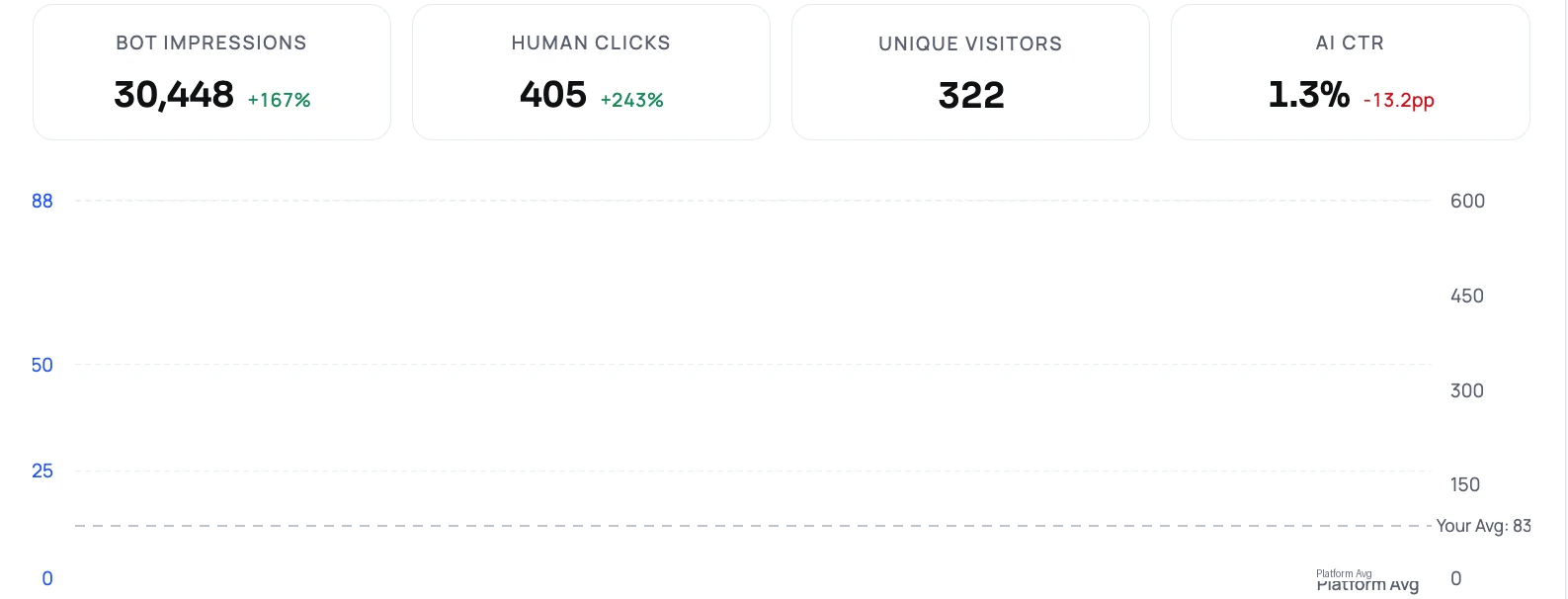
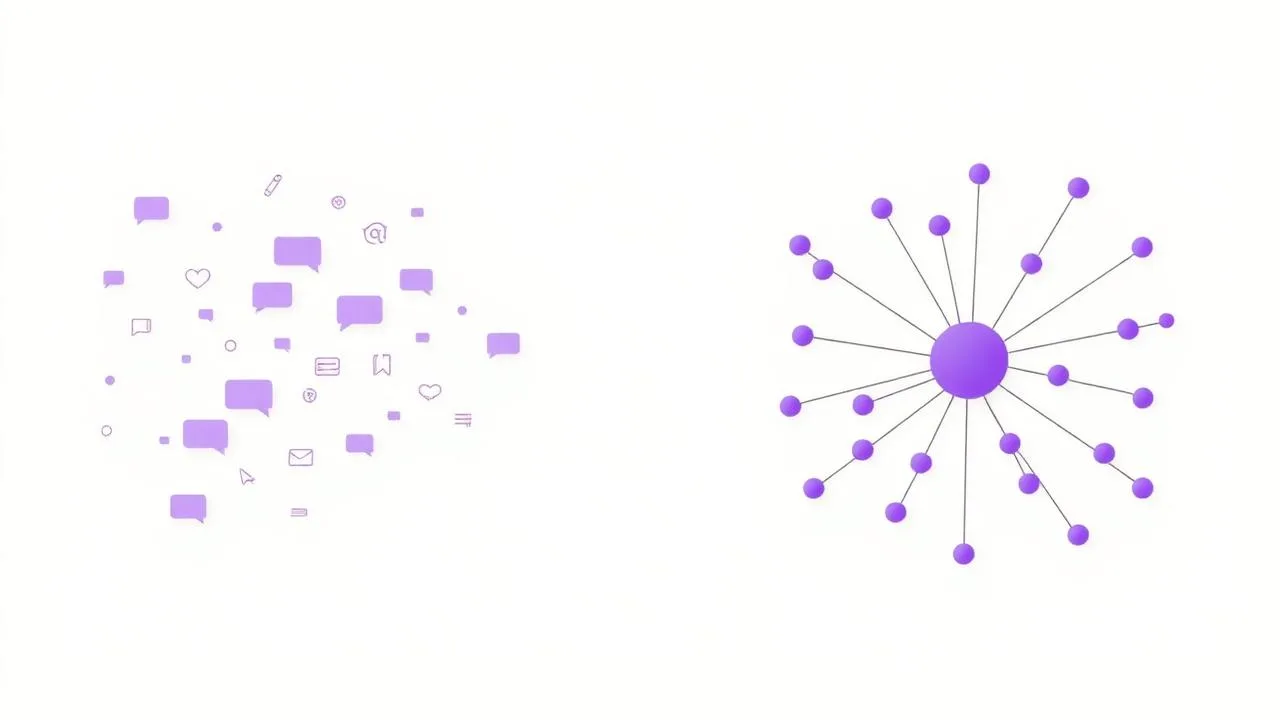
Legacy tracking tools like Semrush and Brand24 capture thousands of web hits for their users daily. A dashboard might show massive reach across industry blogs and news sites. But when potential buyers ask ChatGPT or Perplexity for top tools, those same brands often do not appear once.
Why Tracking Web Mentions Fails in AI Search
Most marketing teams still use legacy tools like Mention to track brand mentions across the web. These platforms scrape standard web pages for keyword matches, which worked perfectly for traditional public relations. They cannot see inside the latent spaces of large language models.
This creates a massive data gap. You might see thousands of web mentions in your dashboard. Yet you earn zero citations when a customer asks an AI assistant about your category. Relying on traditional tracking gives you a false sense of security while competitors steal your AI Search Visibility.
How Do LLMs Decide What Brands to Recommend?
AI search engines do not rank pages based on traditional backlinks or keyword density. They synthesize answers based on entity resolution, machine-readable structured data, and trusted source consensus. Consumers are moving rapidly to these new discovery engines. First Page Sage's May 2026 report shows ChatGPT and Perplexity capturing significant market share for knowledge queries.
A mention on a random blog does not equal a citation in an AI overview. You must optimize for LLM crawler access and AI-ready structured data to ensure these models actually understand who you are.
What Legacy Tools Miss When Measuring AI Visibility
Traditional search volume is dropping as user behavior shifts. AthenaHQ's 2026 GEO landscape analysis points out that AI search engines now answer millions of questions daily without sending users to websites. Legacy tools like Semrush fail to attribute AI referral traffic or measure Share of Voice Analytics in these new environments.
You cannot fix what you cannot measure. If you do not know how often Claude or Gemini cites your brand, you cannot build an Answer Engine Optimization strategy. Forward-thinking marketers are abandoning broad mention tracking for precision LLM Brand Monitoring. They need to see exactly where they stand in generative answers.
Measure Actual AI Search Share of Voice
LightSite AI operates as a Generative Engine Optimization Platform that maps actual generative citations rather than just counting web mentions. We track exact citation sources and measure your competitive position directly within AI-generated answers. Wellows' 2026 analysis of top AI search engines confirms that platforms like Perplexity and Google AI Overviews require specific, live-web optimization.
LightSite AI gives you the exact data needed to make your website machine-readable and secure those high-intent AI citations.
How to Build Your AI Search Analytics Baseline
Stop paying for legacy mention trackers that ignore generative search entirely. Start tracking your AI Citation Tracking metrics using a platform built specifically for the generative web. Identify exactly which competitors appear first inside AI-generated answers for your core topics.
Once you have this baseline, deploy a rich, entity-grounded JSON-LD graph so AI crawlers can resolve who you are, what you do, and which sources corroborate you. A thin Organization block is not enough — pair it with WebSite, Person (founder), and explicit sameAs authority signals:
{
  "@context": "https://schema.org",
  "@graph": [
    {
      "@type": "Organization",
      "@id": "https://www.lightsite.ai/#org",
      "name": "LightSite AI",
      "url": "https://www.lightsite.ai",
      "logo": {
        "@type": "ImageObject",
        "url": "https://www.lightsite.ai/logo.png",
        "width": 512,
        "height": 512
      },
      "description": "Generative Engine Optimization Platform that makes websites machine-readable so AI search engines can cite, recommend and revisit them.",
      "foundingDate": "2024-01-01",
      "founder": { "@id": "https://www.lightsite.ai/#founder" },
      "knowsAbout": [
        "Generative Engine Optimization",
        "Answer Engine Optimization",
        "LLM Citation Tracking",
        "Schema.org structured data",
        "AI crawler analytics"
      ],
      "sameAs": [
        "https://www.linkedin.com/company/lightsite-ai",
        "https://twitter.com/lightsite_ai",
        "https://www.reddit.com/r/lightsite"
      ],
      "contactPoint": {
        "@type": "ContactPoint",
        "contactType": "sales",
        "email": "hello@lightsite.ai",
        "availableLanguage": ["English"]
      }
    },
    {
      "@type": "Person",
      "@id": "https://www.lightsite.ai/#founder",
      "name": "Stas Levitan",
      "jobTitle": "Founder & CEO",
      "worksFor": { "@id": "https://www.lightsite.ai/#org" },
      "sameAs": [
        "https://www.linkedin.com/in/staslevitan"
      ]
    },
    {
      "@type": "WebSite",
      "@id": "https://www.lightsite.ai/#website",
      "url": "https://www.lightsite.ai",
      "name": "LightSite AI",
      "publisher": { "@id": "https://www.lightsite.ai/#org" },
      "inLanguage": "en-US",
      "potentialAction": {
        "@type": "SearchAction",
        "target": {
          "@type": "EntryPoint",
          "urlTemplate": "https://www.lightsite.ai/ai-query?q={search_term_string}"
        },
        "query-input": "required name=search_term_string"
      }
    }
  ]
}
This graph gives Claude, Gemini, ChatGPT and Perplexity stable @id anchors, an explicit founder entity, and authority sameAs signals — the same surface area legacy mention tools never look at.
Stop Guessing About Your AI Search Visibility
The shift from traditional search to AI discovery is already happening. You need a dedicated generative search platform to measure and improve your presence where buyers are actually asking questions.
Run your site through our Generative Engine Optimization Checker to see your actual baseline. Take control of your AI search visibility today and stop relying on outdated mention tracking.
Related reading
- AI Bot Analytics Platform — see which AI crawlers actually cite you.
- LLM Discovery API — auto-generated JSON-LD across every URL.
- Measuring GEO ROI Without Google Analytics
- From Web Mentions to LLM Citations
Related in this cluster
- How to Get Cited by ChatGPT — the action pillar: what to actually change on your site and off it.
- AI Mention Tracking Is Benchmarking, Not Ground Truth — founder-opinion on how to read the numbers honestly.